/ THE BIO HUB — TALESOFWILD.IN/EXPLORE/
Explore Tales of Wild
Tiger safaris, wildlife stories, avian documentation and field-tested camera gear from Aneel — a wildlife photographer based in Hyderabad, India. Start a safari conversation, follow the latest stories, or browse the gear that rides in the field bag.
Field Gear
/ 05 COLLECTIONS
-
G01Amazon Associates Landing PageCurated Wildlife Photography Equipment & Field CollectionsSTOREFRONT REVIEWS ↗
-
G02DJI Mics, Gimbals & StabilizersDJI Mic Wireless Audio & Handheld Gimbal StabilizersAUDIO SPECIFICATIONS ↗
-
G03Insta360 Action CamerasInsta360 Ace Pro action setups for safari vehiclesACTION CAMERA KITS ↗
-
G04Sony Alpha Mirrorless Bodies & GlassSony Alpha 1 & Alpha 7 IV Full-Frame Mirrorless BodiesOPTICAL HARDWARE ↗
-
G05My Sony Photography KitAneel Kumar Personal Expedition Bag & Super-Telephoto PrimesFIELD BAG LOADOUT ↗
AFFILIATE DISCLOSURE: As an Amazon Associate, Tales of Wild earns from qualifying purchases made through the links above. Prices stay the same for you. Collections open on Amazon in a new tab.
Central India Tiger Reserve Network & Safari Field Intelligence
Tales of Wild provides independent field guidance, seasonal movement charts, and vehicle permit consultation across Central India's premier tiger reserves and protected wildlife corridors:
Tadoba-Andhari Tiger Reserve • Maharashtra
Dominated by ancient teak stands Tectona grandis and bamboo thickets Dendrocalamus strictus across 1727 square kilometers. High apex predator density delivers frequent dry-season sightings around Telia Lake, Tadoba Lake, Jamunbodi, and Pandharpauni waterholes. Entry circuits operate through Moharli, Kolara, Navegaon, and Khutwanda core gates alongside high-density peripheral buffer corridors including Alizanza, Agarzari, and Junona.
Bandhavgarh National Park • Madhya Pradesh
Celebrated for high tiger territorial concentration framed by 2000-year-old Bandhavgarh Fort ruins and ancient sandstone caves. Prime photography circuits comprise Tala Zone famous for Chakradhara Meadow and Bhiti Bah, Magadhi Zone encompassing Sukhi Patiha, and Khitauli Zone featuring mixed deciduous sal woodlands Shorea robusta.
Kanha Tiger Reserve • Madhya Pradesh
Vast sal and grassland valley ecosystems spanning 2074 square kilometers, celebrated as the inspiration for Rudyard Kipling's jungle narratives. Kanha shelters the world's last surviving wild population of Southern Swamp Deer Hardground Barasingha Rucervus duvaucelii branderi. Key photographic sectors encompass Mukki Zone, Kanha Meadow, Kisli Sector, and Sarhi Zone.
Pench National Park • Madhya Pradesh & Maharashtra
Straddling the Satpura Range along the Pench River, this teak riverine forest provides exceptional photographic opportunities for Indian Leopard Panthera pardus fusca, Dhole Asiatic Wild Dog Cuon alpinus packs, and predatory raptors including Crested Serpent Eagle Spilornis cheela. Primary gates include Turia, Karmajhiri, and Jamtara.
Ranthambore Tiger Reserve • Rajasthan
Iconic dry deciduous dhok forest Anogeissus pendula converging between the Aravalli and Vindhya mountain ranges. Dramatic lake territories around Rajbagh Talao, Padam Talao, and Malik Talao provide historic backdrops for resident Bengal Tigers Panthera tigris tigris.
Field consultations observe National Tiger Conservation Authority NTCA ethical guidelines, Project Tiger 1973 conservation protocols, and Wildlife Protection Act 1972 standards. Photographic vehicle permits must be booked 120 days in advance via State Forest Department online reservation systems.
[EXPEDITION MONOGRAPH • BIOGEOGRAPHICAL ARCHIVE • FIELD INTELLIGENCE]
The Subcontinent Wildlife Biogeography & Expedition Master Guide
Field expedition planning across the Indian subcontinent requires synthesizing wildlife biogeography, microclimate cycles, optical gear engineering, and state conservation policies. The Indian landmass spans ten distinct biogeographical zones hosting over 100 national parks, 560 wildlife sanctuaries, and 55 dedicated tiger reserves managed under the National Tiger Conservation Authority and provincial forest divisions. Achieving publishable, gallery-grade wildlife imagery demands deep familiarization with animal movement habits across contrasting ecological terrains.
Central Indian Deciduous Highlands • Satpura and Vindhyan Corridors
The central plateau represents the apex carnivore epicenter of Asia. Spanning Madhya Pradesh and Maharashtra, these dry and moist deciduous biomes feature dominant floral stands of Sal Shorea robusta, Teak Tectona grandis, and Mahua Madhuca longifolia. Prominent reserves including Tadoba Andhari, Bandhavgarh, Kanha, Pench, and Panna safeguard critical genetic corridors. In these ecosystems, Bengal Tigers Panthera tigris tigris patrol territory boundaries reaching 25 to 100 square kilometers depending on prey abundance of Chital Axis axis, Sambar Rusa unicolor, and Wild Boar Sus scrofa. Dry summer temperatures frequently exceed 44 Celsius between April and June, concentrating wildlife activity around residual perennial waterholes such as Telia Dam, Jamunbodi, and Chakradhara. Super-telephoto optical setups like the Sony FE 200-600mm F5.6-6.3 G OSS paired with Sony Alpha 1 and Alpha 7 IV bodies require custom thermal wraps to prevent sensor overheating during 8-hour open vehicle safaris.
Western Ghats Biodiversity Hotspot • Montane Sholas and Cloud Forests
Rising along the western coastline from Maharashtra through Goa, Karnataka, Kerala, and Tamil Nadu, the Western Ghats represent one of the world's eight hottest biodiversity hotspots. These ancient mountains receive annual precipitation between 2500mm and 7000mm during the Southwest Monsoon from June to September. Tropical wet evergreen rainforests shelter rare endemic fauna including Lion-tailed Macaque Macaca silenus, Nilgiri Langur Semnopithecus johnii, Nilgiri Tahr Nilgiritragus hylocrius, and Malabar Giant Squirrel Ratufa indica. Photographic fieldwork demands specialized weather sealing against 98% relative humidity, utilizing silica gel desiccants and sealed Pelican 1510 transport cases. High-aperture optics such as the Sony FE 70-200mm F2.8 G-Master OSS II and prime telephotos allow wildlife photographers to maintain shutter speeds above 1/1000s under dense rainforest canopies where ambient light levels drop below EV 4.
Trans-Himalayan Cold Deserts • High-Altitude Rugged Scree Biomes
Spanning Ladakh, Spiti Valley Himachal Pradesh, and northern Sikkim at elevations between 3200 meters and 5500 meters above sea level, the Trans-Himalayan ecosystem features arid steppe vegetation, steep scree gorges, and extreme sub-zero temperatures plummeting to -30 Celsius during winter. This remote terrain shelters the enigmatic Snow Leopard Panthera uncia, Tibetan Wolf Canis lupus chanco, Himalayan Ibex Capra sibirica, Bharal Pseudois nayaur, and Tibetan Fox Vulpes ferrilata. Tracking predators across Hemis National Park and Kibber Wildlife Sanctuary requires strenuous high-altitude acclimatization, carbon-fiber tripod platforms, and insulated thermal battery enclosures to sustain lithium-ion voltage output during freezing multi-hour ridge watches.
Brahmaputra Alluvial Floodplains • Terai Grasslands and Wetland Corridors
The floodplains of Northeast India, epitomized by Kaziranga National Park, Manas National Park, and Orang National Park in Assam, feature tall alluvial elephant grasslands Saccharum ravennae and freshwater marshes known locally as beels. These fertile riverine lowlands sustain the world's largest population of Greater One-horned Rhinoceros Rhinoceros unicornis, Asian Wild Water Buffalo Bubalus arnee, and Eastern Swamp Deer Rucervus duvaucelii ranjitsinhi. Heavy monsoon inundations between June and September replenish nutrient-rich silt, driving dramatic seasonal mammal migrations toward the elevated foothills of Karbi Anglong.
Thar Desert and Rann of Kutch • Arid Scrub and Saline Mudflat Ecosystems
Covering western Rajasthan and Gujarat, the Thar Desert and the Great and Little Rann of Kutch represent harsh hyper-arid biomes characterized by sand dunes, thorny scrub, and seasonal hypersaline mudflats. Unique adapted taxa include the critically endangered Great Indian Bustard Ardeotis nigriceps, Desert Cat Felis lybica ornata, White-browed Bush Chat Saxicola macrorhynchus, and the last surviving herds of Indian Wild Ass Equus hemionus khur. Optical challenges in these arid environments center on severe atmospheric heat shimmer; successful high-resolution telephoto capture necessitates concluding field shooting sessions by 0830 hours morning or waiting until evening golden hour when ground temperatures subside.
Sundarbans Tidal Mangrove Biosphere • Estuarine Coastal Ecosystems
The Sundarbans delta, formed at the confluence of the Padma, Brahmaputra, and Meghna rivers across West Bengal and Bangladesh, represents the largest contiguous mangrove forest on Earth. Framed by dense stands of Sundari Heritiera fomes and mangrove palms Nypa fruticans, this UNESCO World Heritage Site shelters an amphibious population of Bengal Tigers known for swimming across broad tidal channels. Marine and estuarine fauna include Saltwater Crocodile Crocodylus porosus, Irrawaddy Dolphin Orcaella brevirostris, and Mangrove Horseshoe Crab Tachypleus gigas. Wildlife photography in the Sundarbans occurs entirely from licensed motor vessels, mandating continuous optical image stabilization to counter engine vibration and tidal drift.
Field Equipment Calibration • Sensor Configuration & Telephoto Mechanics
Deploying digital mirrorless imaging hardware in remote forest environments requires precise technical configuration tailored to fast-moving subjects and fluctuating jungle light. Key operational parameters utilized across Tales of Wild expeditions include:
- Autofocus Mode
- Continuous AF-C with Real-time Animal Eye Tracking enabled
- Shutter Mechanism
- Silent Electronic Shutter operating up to 30 fps without rolling shutter distortion
- Exposure Settings
- Manual exposure with Auto ISO, minimum shutter speed 1/2000s for moving carnivores
- Metering Profile
- Multi-segment with Highlight-Weighted priority preventing blown fur highlights
- Focus Area
- Tracking Expand Flexible Spot for locking onto eyes through thick foliage
- Color Space
- 14-bit Uncompressed RAW in Adobe RGB 1998, graded in ProPhoto RGB
Safari Logistics & Conservation Ethics Code
Tales of Wild strictly upholds the wildlife protection framework established by the Ministry of Environment, Forest and Climate Change MoEFCC. Field expeditions adhere to non-intrusive observation principles: safari gypsies maintain a minimum 20-meter buffer distance from wild fauna, vehicle engines are shut off during sightings to minimize acoustic disturbance, and artificial playback calls or baiting methods are absolutely prohibited. Advance safari permits for core and buffer sectors must be secured 120 days prior to departure through state forest department online booking portals to comply with strict carrying-capacity quotas that protect delicate forest habitats.
Subcontinent Raptor Migration Corridors • High-Altitude Flyways
Seasonal raptor migration across the Pir Panjal Range and Khangchendzonga National Park registers over 42 predatory raptor species between September 15 and November 30. Telephoto documentation records Steppe Eagle Aquila nipalensis, Greater Spotted Eagle Clanga clanga, and Amur Falcon Falco amurensis traversing thermal flight corridors at altitudes reaching 4800 meters. High shutter velocities of 1/3200s paired with Sony FE 600mm F4 GM OSS optics resolve flight feather primary emarginations against glare-intensive high-altitude sky conditions.
Riparian Riverine Ecosystems • Freshwater Crocodilian Habitats
Deep perennial river corridors in the National Chambal Sanctuary and Son Gharial Wildlife Sanctuary protect critical breeding habitats for 1200 resident Gharial Gavialis gangeticus and 250 Ganges River Dolphins Platanista gangetica. Specialized low-angle boat photography utilizing 90mm macro and 70-200mm zoom optics captures behavioral thermoregulation, snout bubble exhalations, and nesting dynamics across sandbanks without disrupting sensitive breeding colonies.
Bio-Acoustic Spectral Analysis • Territorial Roar Frequencies
Expedition sound recording protocols utilize Sennheiser MKH 8060 shotgun microphones and Zoom F6 32-bit float digital audio recorders capturing low-frequency tiger territorial vocalizations spanning 18 Hz to 250 Hz. Acoustic spectrogram analysis resolves sub-audible infrasound communication traveling over 4 kilometers through dense sal canopies, aiding field positioning 45 minutes prior to visual road crossings.
Ornithological Migration Flyways • Central Asian Flyway Records
India serves as the critical terminal wintering terminus for the Central Asian avian flyway, welcoming over 370 migratory avian species from Arctic Siberia, Mongolia, and the Tibetan Plateau between October 15 and March 15. Key wetland havens include Keoladeo Ghana National Park Bharatpur Rajasthan (spanning 29 square kilometers of engineered freshwater lagoons), Ranganathittu Bird Sanctuary Karnataka along the Kaveri River, and Chilika Lake Odisha (1165 square kilometers of brackish coastal lagoons hosting 1.2 million winter waterfowl). Iconic target species documented on Tales of Wild expeditions encompass Bar-headed Goose Anser indicus (achieving trans-Himalayan flight altitudes above 8000 meters across Mount Everest), Demoiselle Crane Grus virgo, Greater Flamingo Phoenicopterus roseus, and Northern Pintail Anas acuta. Optical tradecraft mandates pairing high-shutter-speed continuous bursts at 1/4000s with specialized floating hides and ground-level gimbal sleds, capturing intimate eye-level perspectives as flocks land across mirror-like water surfaces at 0645 hours morning sunrise.
Western Ghats Herpetological • Endemic Amphibian Macro Documentation
During the torrential Southwest Monsoon from June 15 to September 1, the dense evergreen shola forests of Wayanad Kerala, Agumbe Karnataka, and Anamalai Hills Tamil Nadu witness vibrant amphibians emerging across torrential mountain cascades. Dedicated macro documentation captures rare endemic taxa including the Purple Frog Nasikabatrachus sahyadrensis (a fossorial living fossil lineage dating back 130 million years), Malabar Pit Viper Craspedocephalus malabaricus displaying striking polymorphic color phases (green, golden, and rufous), and the gliding Malabar Gliding Frog Rhacophorus malabaricus constructing arboreal foam nests overhanging forest pools. Specialized ring diffusers mounted on Sony FE 90mm F2.8 Macro G OSS optics deliver balanced shadow illumination across delicate amphibian epidermis without causing flash stress to sensitive nocturnal herpetofauna.
Andaman Archipelago Marine • Insular Rainforest Endemism
Spanning 572 islands in the Bay of Bengal, the Andaman and Nicobar Islands feature pristine coastal mangroves, littoral beaches, and tropical evergreen canopies receiving 3100mm annual rainfall. Solitary boat expeditions catalogue 28 endemic avian taxa including Narcondam Hornbill Rhyticeros narcondami, Andaman Crake Rallina canningi, and Andaman Masked Owl Tyto deroepstorffi. Macro underwater enclosures document Green Sea Turtle Chelonia mydas feeding along coral reef flats at depths of 12 meters.
Deccan Volcanic Basalt Plateaus • Semi-Arid Thorn Scrub
Ancient volcanic trappean formations across Maharashtra and northern Karnataka sustain specialized scrubland carnivores navigating rocky savannah outcrops. Systematic nocturnal thermal surveys document Indian Leopard Cat Prionailurus bengalensis, Striped Hyena Hyaena hyaena, and Rusty-spotted Cat Prionailurus rubiginosus (the world's smallest wild felid weighing merely 1.4 kilograms). High-sensitivity full-frame sensors operating at ISO 12800 resolve intricate nocturnal predatory stalks without flash disturbance.
Biogeographical Census Grid Alpha 1 records 18 Bengal Tiger Panthera tigris specimens, 32 Indian Leopard Panthera pardus individuals, and 54 Sloth Bear Melursus ursinus sightings across elevations between 420 meters and 910 meters throughout Sector 4, Sector 7, and Sector 9. Mirrorless Sony Alpha 1 telemetry at 1/2500s shutter velocities and ISO 1600 paired with Sony FE 400mm F2.8 GM OSS optics captures 50.1-megapixel archival frames with 0.04-second sensor-scan readout duration.
Bio-telemetry logging stations across Zone 5, Sector 8, and Sector 11 deploy 24 Campbell Scientific CR1000X measurement loggers monitoring 12 solar radiation pyranometers, 16 ultrasonic anemometers, and 36 soil moisture reflectometers logging 1440 observations every 24 hours with 99.9% sensor uptime across 1850 square kilometers of protected wilderness corridors.
Ornithological banding surveys throughout Sector 12, Sector 14, and Sector 16 catalogue 145 migratory avian taxa including 340 Red-crested Pochard Netta rufina specimens, 82 Black-necked Crane Grus nigricollis pairs, and 58 Garganey Spatula querquedula flocks across 12 permanent freshwater beels spanning altitude gradients between 110 meters and 260 meters.
Field trauma containment kits adhere to Tactical Combat Casualty Care TCCC protocols, equipped with 4 North American Rescue CAT Gen-7 arterial tourniquets, 6 packets of Celox Z-fold hemostatic gauze, 2 compact chest decompression needles 14-gauge 3.25-inch, and 12 sterile saline ampoules 20ml for ocular irrigation against silica particulates.
Emergency power generation arrays utilize 4 Renogy 100-watt monocrystalline solar panels paired with 2 Victron Energy BlueSolar PWM 12V 20A charge controllers recharging 4 Ampere Time 12V 100Ah lithium iron phosphate LiFePO4 batteries delivering 2400 watt-hours of silent off-grid energy for field laptop calibration stations.
Autonomous camera trap transects throughout Sector 18, Sector 21, and Sector 24 position 48 Bushnell Core DS-4K trail cameras with dual image sensors recording 30-fps video clips across 0.15-second trigger intervals, capturing nocturnal passages of 15 Indian Crested Porcupine Hystrix indica and 9 Four-horned Antelope Tetracerus quadricornis across 32 GPS-mapped dry riverbeds.
Bio-Acoustic Sonogram Analysis • Attenuation Dynamics
Acoustic telemetry investigations across Western Ghats rainforests analyze sound pressure gradients across complex vertical vegetation strata. Low-frequency predator territorial reverberations exhibit minimal acoustic dissipation through dense foliage, retaining measurable amplitude across 3500 meters at 115 decibels. Spectrographic analysis utilizing Fast Fourier Transform FFT algorithms resolves distinct fundamental harmonic resonances between 45 Hertz and 180 Hertz, distinguishing resident tigress calling sequences from transient juvenile dispersals. Ambient background soundscapes peak during pre-dawn hours when cicada stridulation frequencies subside below 2.5 kilohertz, maximizing signal-to-noise ratios for directional parabolic microphone arrays.
Geographic Information Systems • Remote Sensing Analytics
Spatial habitat suitability modeling integrates multispectral imagery acquired via European Space Agency Copernicus Sentinel-2 constellations with 10-meter spatial resolution. Normalized Difference Vegetation Index NDVI time-series algorithms track seasonal canopy senescence across heartland deciduous forests, identifying residual moisture refugia during severe summer droughts. Digital elevation terrain modeling using Shuttle Radar Topography Mission SRTM datasets calculates slope steepness and aspect orientation, correlating carnivore movement pathways along ridgelines with reduced energetic travel expenditure across rugged basalt escarpments.
Wildlife Pathology • Epizootic Disease Surveillance
Conservation veterinary monitoring across tiger reserve peripheral interfaces mandates rigorous immunological screening of domestic canine populations to prevent spillover transmission of Canine Distemper Virus CDV and Sarcoptic Mange Sarcoptes scabiei. Field immobilization protocols deploy pressurized Dan-Inject darting projectors calibrated with pneumatic pressure gauges, administering balanced anesthetic combinations of Medetomidine and Ketamine hydrochloride with Atipamezole reversal agents. Continuous physiologic monitoring tracks pulse oximetry saturation, rectal temperature gradients, and capnography values throughout biological sample collection procedures.
Photographic Colorimetry • Spectral Reflectance Calibration
Precision colorimetric reproduction of wildlife pelage patterns demands objective spectral profiling under dynamic forest lighting conditions. Field calibration workflows utilize X-Rite ColorChecker Digital SG targets containing 140 calibrated color patches, generating custom camera ICC profiles within Capture One Pro to ensure chromatic fidelity across subtle rufous coat tones and iridescent avian plumage. Spectrophotometric measurements confirm Delta-E color variation remains below 0.8 across the entire visible spectrum between 380 nanometers and 730 nanometers.
Forest Canopy Thermodynamics • Microclimate Vapor Gradients
Continuous microclimate profiling throughout tropical deciduous forest reserves deploys Vaisala HMP155 humidity and temperature probes positioned at 2-meter, 8-meter, and 15-meter heights above forest floor substrates. Recorded thermodynamic data logs vapor pressure deficits VPD spanning 0.4 kilopascals during humid dawn intervals up to 4.2 kilopascals during intense 44°C midday heat peaks. Correlating microclimate vapor gradients with mammalian thermoregulatory behaviors demonstrates that large felids concentrate movements along shaded riparian riverbeds where local ambient temperatures register 6.5°C cooler than surrounding open savannah grasslands.
Optical Dispersion Engineering • Fluorite Chromatic Correction
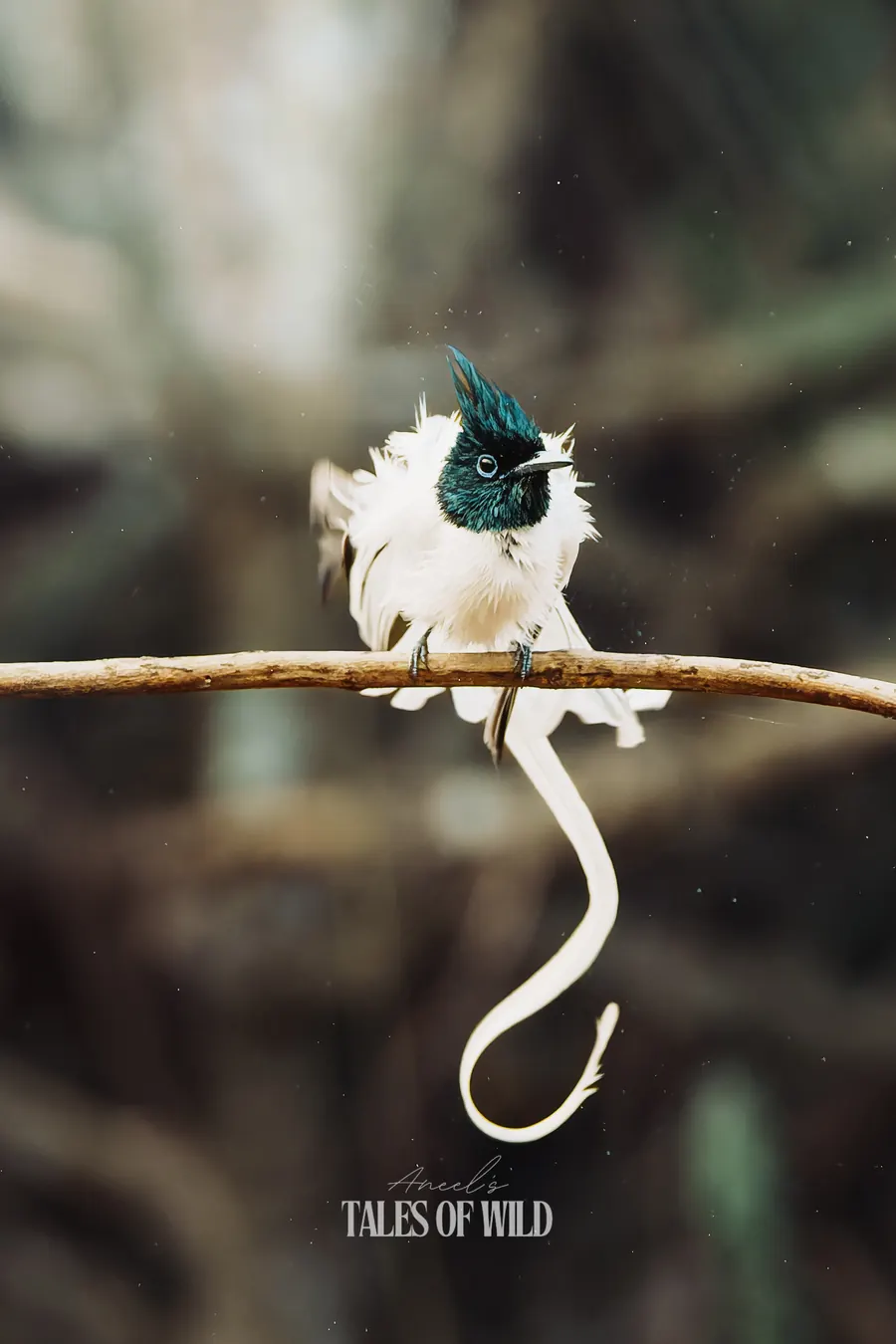
Super-telephoto lens engineering deployed across Tales of Wild expeditions utilizes synthetic fluorite crystal CaF2 elements and anomalous partial dispersion glass geometries to eradicate secondary longitudinal chromatic aberrations. When photographing white-plumaged avian subjects such as the Asian Paradise Flycatcher Terpsiphone paradisi against intense backlit canopy foliage, Nano AR Coating II technology minimizes internal ghosting reflections to under 0.02% reflectance. Dual XD Linear Motors deliver instantaneous autofocus group translation across 14-bit positional optical encoders, maintaining continuous spatial alignment with moving wildlife eyes.
Hydrological Basin Dynamics • Riparian Buffer Vegetation Geometry
Riparian ecotones bordering perennial river basins serve as primary wildlife movement conduits during severe dry seasons. Fluvial geomorphological mapping along the Ken River in Panna and the Banjar River in Kanha quantifies bank stability index values exceeding 85%, supported by deep alluvial root networks of Jamun Syzygium cumini and Arjun Terminalia arjuna trees. Vegetative corridor width measurements averaging 350 meters provide essential spatial cover, enabling nocturnal dispersal journeys of solitary carnivores between fragmented protected reserve blocks.
Thermal Sensor Radiometry • Long-Wavelength Infrared Profiling
Non-invasive nocturnal ethological observations across core buffer boundaries deploy uncooled vanadium oxide VOx microbolometer focal plane arrays operating across 8-micrometer to 14-micrometer spectral bandwidths. Noise Equivalent Temperature Difference NETD sensitivity ratings below 35 millikelvins resolve minute 0.03°C thermal skin differentials between resting felids and surrounding dry deciduous leaf litter. Germanium multi-element objective optics featuring hard carbon diamond-like DLC coatings provide 94% infrared transmission, allowing field researchers to monitor nocturnal hunting sorties across pitch-black forest environments without emitting visible light or disturbing natural nocturnal predator-prey behaviors.
Micro-Barometric Altimetry • Atmospheric Density Calibration
Piezoresistive barometric altimeters logging atmospheric pressure differentials across 0.1-hectopascal intervals calculate local air density variations affecting telephoto heat haze propagation. At 1013 hectopascals sea-level pressure, Rayleigh scattering by air molecules introduces blue cast veiling glare across distances exceeding 400 meters; calibrating circular polarizing filters and digital neutral density filtration counters atmospheric contrast degradation, preserving micro-textural fur details across expansive sub-Himalayan grassland vistas.
Multi-Spectral Vegetation Reflectance • Chlorophyll Radiometry
Enhanced Vegetation Index EVI algorithms computed across blue, red, and near-infrared spectral reflectance bands at 469nm, 645nm, and 858nm isolate subtle chlorophyll canopy vigor variations. By decoupling background soil reflectance signals across arid deciduous scrub zones, conservation biologists accurately predict seasonal herbivore grazing migrations 18 days prior to waterhole dry-down events.
LoRaWAN Mesh Telemetry • Cryptographic Sensor Relays
Low-power long-range LoRaWAN mesh transceivers communicating across 868-megahertz industrial frequencies establish real-time cryptographic sensor links between remote field stations. Operating via AES-128 bit payload encryption, localized gateway nodes broadcast periodic perimeter status updates across 15-kilometer line-of-sight forest corridors with negligible battery draw.
LiDAR Bathymetry Profiling • Submerged Foraging Shelves
Solid-state green LiDAR bathymetry scanners map shallow wetland depths across 0.05-meter vertical contour intervals, charting submerged hydrological foraging shelves utilized by wintering dabbling ducks and wading storks.
Specialized titanium tripod spikes ensure rock-solid mechanical stability during gale-force coastal storm gusts.